My wife and I have a vacation home on Cape Cod. It’s an early 70’s “Cape” style house that had until recently, paneling for walls, vinyl flooring, a Rose colored shag rug, and all of the original appliances – 70’s era stove, dishwasher, washer/dryer, and inefficient electric baseboard heating units in each room. Needless to say, it was ready for an upgrade, and the initial plan to “bump out the kitchen” turned into a much larger project. Now we have a beautiful new home with all sorts of connected IoT devices.
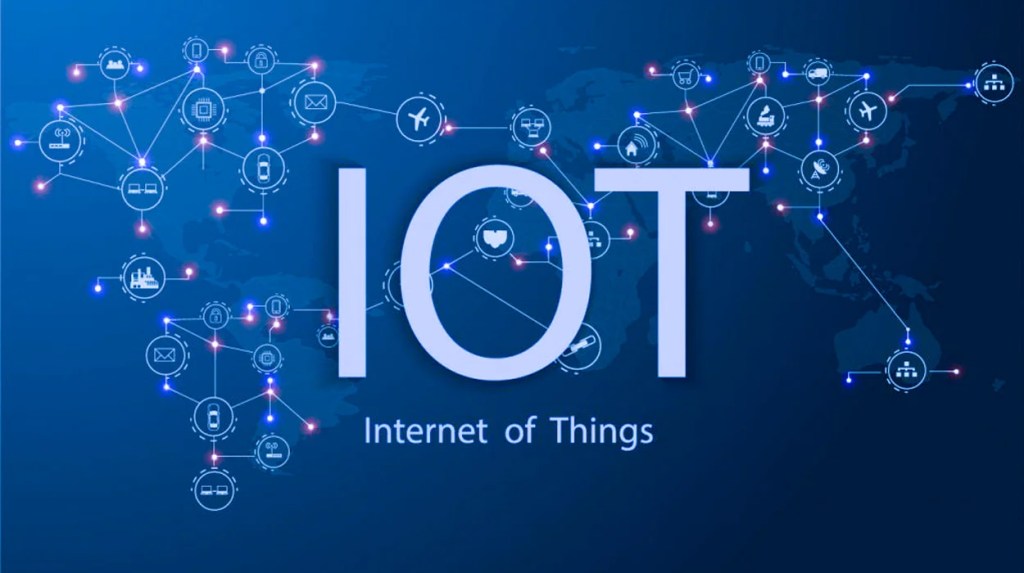
The term Internet of Things, or IoT for short, has been around for quite a while. I think a number of people claim to have invented the name, but Wikipedia gives credit to Peter T. Lewis from 1985, who said, “The Internet of Things, or IoT, is the integration of people, processes and technology with connectable devices and sensors to enable remote monitoring, status, manipulation and evaluation of trends of such devices.” I think Peter nailed it!
So back to our vacation house, with all of the upgrades, it quickly became a showcase for IoT: All of our new Bosch kitchen appliances, as well as the Maytag washer/dryer are all Wi-Fi enabled and connected to our Xfinity router. Add to that the Bradford hot water heater, the 3 Ecobee thermostats, and the DiY Solar Powered security camera I mounted in the back, you can see this becoming connected everywhere. We now have a house of IoT “Things.”

Bosch won an award for their implementation of IoT in the home
You may ask what the benefit of having all of these home devices connected really brings. The home owner may like to know when the dishes are clean or what temperature the refrigerator is at, but the benefits extend to a popular IoT use case for electronic product makers: predictive maintenance. The ability to measure the appliance’s motor performance, excessive vibration and noise with the use of sensors gives the manufacturer the ability to get early detection of failures before they happen, initiating a service call to the home.
Another valuable benefit to the manufacturer is the ability to gain critical operational data and usage statistics for the product’s marketing department. According to SK, a U.K. based marketing strategy firm, “businesses are adopting IoT solutions to streamline operations and gain a competitive edge. In 2021, there were more than 10 million IoT devices connected worldwide and it is estimated that by 2030, that number will exceed 25.4 billion.”
While the infrastructure to enable IoT is mostly in place, i.e. the Internet itself, the cloud services from the likes of Amazon and Google, and equipment like Wi-Fi routers, modems, and smart phones, it’s the “things” of IoT where all of the innovation is going to continue to happen. As Mr. Lewis prophesized, these “connectable devices and sensors [will] enable remote monitoring, status, manipulation and evaluation of trends of such devices.”
We can simplify IoT “things” into a basic architecture, consisting of a processing element, a communication channel (to the Internet), and one or more sensors or actuators to either measure and report or take action.

It’s the hardware associated with these core functions of IoT Things that is the focus of WindSail IoT Consulting. Look for deep dive blogs in our Technology section, covering latest product advancements, emerging standards, and exciting new use cases for IoT in the world.
 WindSail IoT Consulting